

Reviews of AI-Based UGC Video Creation Services 2026
Hi there, I’m Dora!
In 2026, AI-based UGC video creation services evolved from experimental novelties into core infrastructure for brand content marketing. This in-depth review covers six leading platforms, breaks down the AI + human hybrid workflow, and provides a real cost comparison — so you can find the right solution for your business.
What "AI-Based UGC Creation" Actually Means
Many brand marketers searching for AI UGC tools don't have a clear picture of what "AI" actually does within the UGC video production chain. Simply put, ai-based ugc video creation services are not a single feature — they're a complete system built from four core modules.
AI Script Generation
Modern ai ugc platforms almost universally include a script generation engine. This step compresses script creation from hours down to minutes — a critical advantage for teams that need to batch-test large volumes of creative.
AI Avatar / Voiceover
This is the most visible core technology in AI video generators for ugc. By 2026, top-tier platforms produce digital humans that closely resemble real actors, with perceptible differences remaining mainly in extreme close-ups or high-emotion scenes.
AI Editing Suggestions
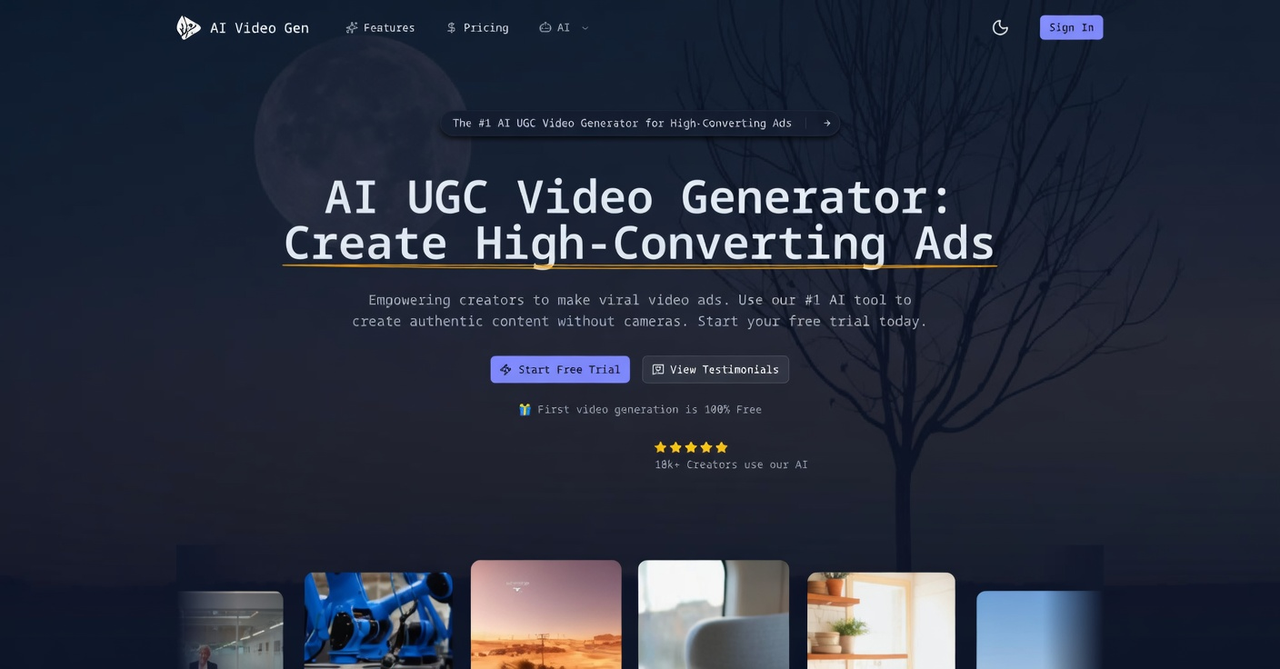
Some platforms — such as NemoVideo — take a different approach. Rather than generating digital humans, they apply machine learning video tools to analyze existing real-person UGC footage, automatically surfacing optimal cut points, subtitle style recommendations, and platform format adaptations. The result is a dramatic boost in post-production efficiency without replacing the authentic creator.
What AI Can't Do Yet
Despite rapid advances in automated ugc creation technology, the following tasks remain beyond AI's current capabilities:
Genuine emotional resonance — AI cannot replicate the authentic expressions and vocal nuance of a real user genuinely experiencing a product
Cultural subtlety — Region-specific humor, slang, and sensitivities require human oversight
Deep brand consistency control — Maintaining a unified visual language across platforms and campaign series still relies on experienced editors
Real-time trend hijacking — Creative judgment around spontaneous trending moments cannot be fully automated
6 AI UGC Services Reviewed
We evaluated the following six leading ai-based ugc video creation services across output quality, avatar realism, batch production capacity, value for money, and workflow integration.
AI Editing Agent
NemoVideo — AI Editing Features In-Depth
NemoVideo is one of the most noteworthy emerging AI video editing platforms of 2026. Unlike tools focused on avatar generation, NemoVideo officially launched in November 2025 and positions itself as a "Conversational Editing Agent." Its core workflow follows a three-step loop: Hunt (trend discovery) → Analyze (content deconstruction) → Recreate (structural rebuilding).
In hands-on testing, NemoVideo's AI Smart Rough Cut feature automatically identifies the highest-converting clips from a pool of 50 raw UGC assets, compressing what would normally be hours of rough-cut work into under 15 minutes. Its AI caption-removal tool cleanly strips native TikTok and Instagram hardcoded subtitles, delivering clean source footage for brand re-editing.
The Talk-to-Edit interface accepts natural language instructions such as "boost the energy in the opening" or "emphasize the product close-up at the 30-second mark" — no professional editing experience required. According to internal test data, the platform reduces standard product video production time by approximately 60–70%.
Best for: Teams that already have real UGC footage and need efficient re-editing and data-driven content iteration. Pricing: Free trial available; professional plans on demand. Limitation: No avatar generation capability — best paired with a separate AI generation tool.
AI Generation — Avatar Creator
Arcads — Best for Performance Marketing

Arcads consistently ranks as the most realistic AI avatar platform in 2026 evaluations. Its core advantage: once a script is fed in, the AI "actors" deliver the content in a convincingly natural way, with facial micro-expressions and tonal variation noticeably ahead of comparable competitors. Batch generation mode supports the rapid production of dozens of hook and CTA variants from a single product — ideal for media-buying teams running large-scale A/B tests.
Pricing: Starter $39/month (100 credits); Pro $99/month (200 credits, full avatar library). Best for: DTC brands and agencies running high-frequency creative testing. Limitation: Requires strong scripts to shine; close-up shots can still feel slightly AI-generated.
AI Generation — Multilingual
HeyGen — Best for Multilingual UGC Localization
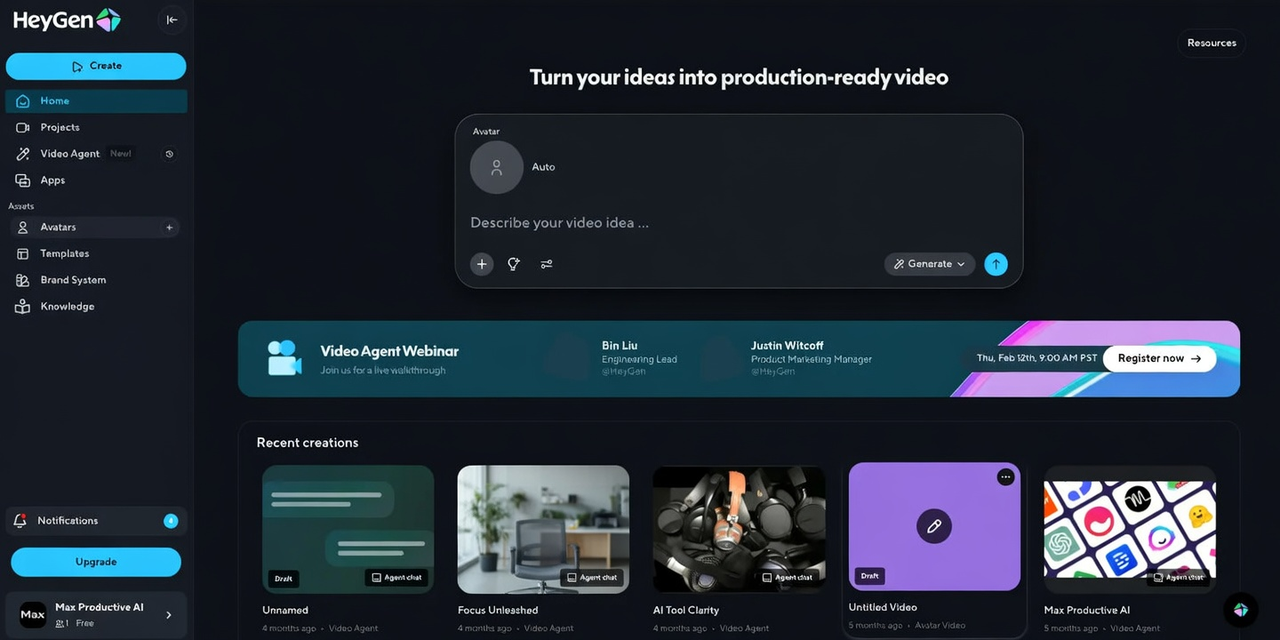
HeyGen stands out in cross-market campaigns thanks to its advanced lip-sync technology and support for 30+ languages. Its translate-and-re-lip-sync feature efficiently converts a single creative asset into multiple language versions, making it an invaluable cost-saver for global brands.
Pricing: Free trial available; Creator plan starts at $29/month. Best for: Cross-border e-commerce and global brands running multilingual ad campaigns. Limitation: Not purpose-built for UGC advertising — hook pacing and creative strategy must be managed separately.
AI Generation — Batch Production
Creatify — Best for Maximum Creative Volume
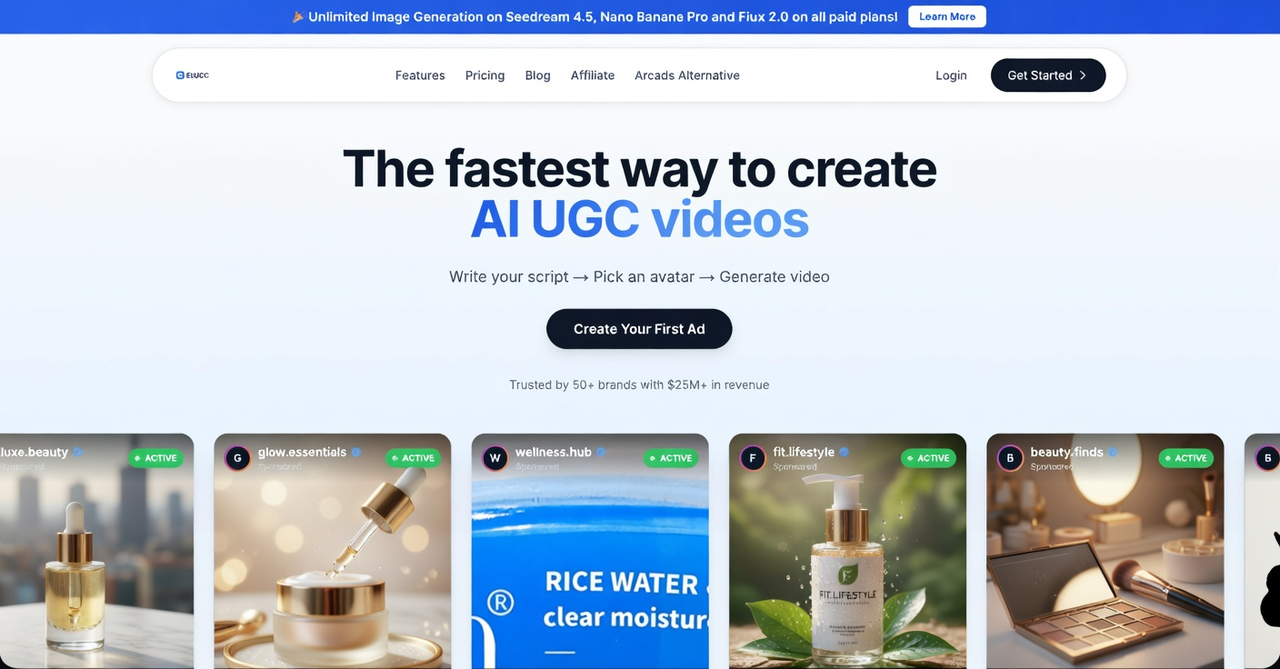
Creatify is the go-to choice for teams that prioritize sheer output volume. Its product-URL-to-ad workflow is remarkably smooth — paste a landing page link and the platform automatically scrapes product images, writes a script, matches an avatar, and renders the output. Advanced plans offer a library of 1,500+ avatars, and batch mode can generate 50+ creative variants simultaneously.
Pricing: Free tier available; Starter $39/month, Pro $99/month (full avatar library). Best for: E-commerce teams with large SKU catalogs needing high-frequency creative testing. Limitation: Avatar quality varies significantly; free tier adds watermarks; credits do not roll over monthly.
AI Generation — Entry Level
MakeUGC — Best Budget Entry Point
MakeUGC enters the market with approachable pricing, offering 150+ digital avatars and 7 AI agents covering script generation, video remixing, multilingual translation, and more. For early-stage brands just beginning to explore AI UGC workflows, MakeUGC is a practical starting point. Some avatars perform well, though overall realism still lags behind Arcads and HeyGen.
Reported generation times: talking-head videos take approximately 2–10 minutes; AI hook clips render in roughly 5–10 seconds. Pricing: Subscription-based; no free trial, but a money-back guarantee is offered. Best for: Budget-constrained early-stage brands. Limitation: Some avatars show obvious AI artifacts — not suitable for mature brands demanding high-quality output.
AI Generation — Enterprise
Synthesia — Best for Enterprise-Scale Deployment
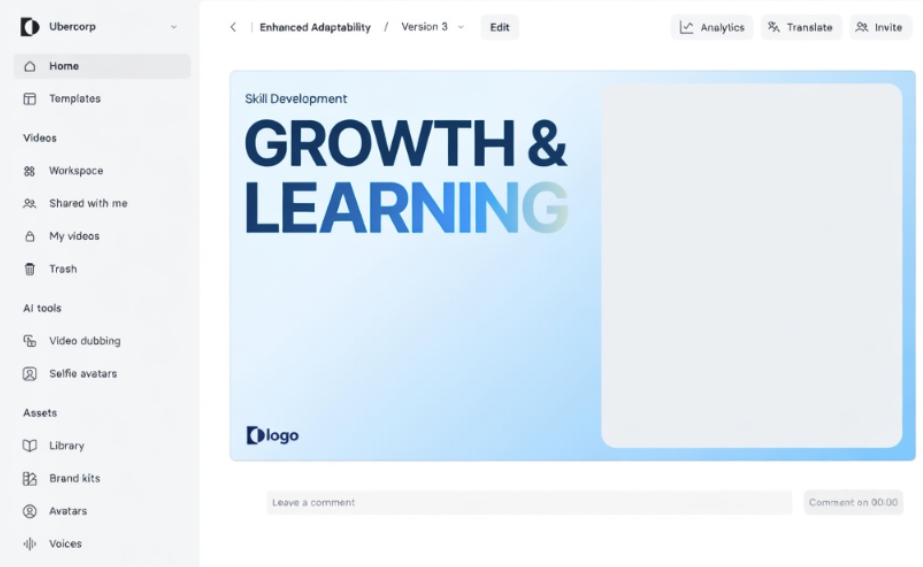
Synthesia offers 160+ diverse avatars and support for 140+ languages, making it the benchmark choice for enterprise clients. Its custom avatar feature allows brands to create proprietary virtual spokespeople from video footage, ensuring visual consistency across campaign series. SSO, API access, and team collaboration features make it a natural fit for large organizations integrating AI UGC into complex workflows.
Pricing: Starts at $18/month; enterprise pricing available on request. Best for: Multinational corporations and teams requiring compliance and IT integration. Limitation: Overall tone skews formal; the "native feel" of UGC is slightly weaker than tools purpose-built for ad creative.
The AI + Human Hybrid Workflow
In real-world projects, the highest-converting UGC content doesn't come from purely AI-generated output — it comes from an AI-generated + human-refined hybrid workflow. The following case study shows how to combine Arcads (generation) with NemoVideo (editing) for maximum results.
Generate with AI, Edit with NemoVideo
This combination makes the most of what each category of ai ugc tools does best: Arcads rapidly outputs a large volume of raw material, while NemoVideo uses data intelligence to identify and optimize the most promising versions.
Step-by-Step Example
Step 1 – Script variants: In Arcads or MakeUGC, input your product landing page and generate 6 scripts with different hook directions (problem-based, benefit-based, pattern-interrupt, etc.).
Step 2 – Batch render: Assign 3–4 avatars to each script and batch-generate 18–24 raw videos.
Step 3 – Trend intelligence: In NemoVideo's Hunt module, search for recent viral videos in your product category and extract the structural DNA of high-converting content.
Step 4 – Smart rough cut: Import raw assets into NemoVideo, use AI Smart Rough Cut to auto-flag the best segments, and refine pacing with Talk-to-Edit natural language commands.
Step 5 – Captions and format: Add branded caption styles and export in 9:16 (TikTok/Reels), 1:1 (Feed), and 16:9 (YouTube) with a single click.
Step 6 – Live testing: Launch 5–8 final versions and use CTR and watch-rate data to guide the next iteration cycle.
💡 Pro tip: Based on real-world data from multiple DTC brands, adopting an AI + human hybrid workflow reduces creative testing costs by an average of 78%, while increasing creative iteration speed by more than 5×. See the Design Revision industry comparison report for additional data insights.
What Still Requires Manual Editing
Even within the most sophisticated automated ugc creation systems, the following three areas remain highly dependent on human judgment and cannot be fully replaced by AI.
Platform-Specific Tweaks
Different platforms have distinctly different algorithmic preferences for video content. TikTok favors assets with strong visual stimulation within the first 0.5 seconds; Meta Feed is more tolerant of text-heavy information density; YouTube Shorts rewards complete narrative arcs. AI tools can output technically compliant multi-format versions, but creative micro-adjustments tailored to each platform's aesthetic logic still require experienced content operators. For Meta-specific best practices, refer to the Meta official ad creative guidelines.
Brand Consistency
Across different rendering batches, AI avatars can exhibit subtle drift in skin tone rendering, background lighting, and speech cadence. Ensuring that a series of ads maintains high consistency in visual language, brand colors, and messaging style requires frame-by-frame human review. This is especially critical for categories such as luxury goods and beauty, where brand image precision is non-negotiable.
Cultural Nuance
Even the most advanced multilingual ai ugc platforms cannot fully grasp the humor, sensitive vocabulary, or regional idioms of a specific market. UGC ads targeting non-English-speaking markets should always be reviewed by a native speaker before going live — this is a necessary cost of risk management, not an optional extra.
Cost Analysis: AI vs Traditional
The table below is based on 2026 market research data, comparing traditional human-creator UGC production against leading ai-based ugc video creation services across key cost dimensions.
Cost Dimension | Traditional Human UGC | AI UGC (Generation) | AI + Human Hybrid |
Cost per video | $150 – $2,000 | $2 – $20 | $15 – $50 |
Turnaround time | 5 – 21 days | 5 – 30 minutes | 1 – 4 hours |
Batch testing (50 assets) | $7,500 – $10,000+ | $100 – $500 | $500 – $1,500 |
Multilingual localization (5 languages) | $3,000 – $8,000 | $50 – $200 | $200 – $600 |
Authenticity / Emotional resonance | ⭐⭐⭐⭐⭐ | ⭐⭐⭐ (significantly improved in 2026) | ⭐⭐⭐⭐ |
Key takeaway: For performance marketing teams that need to iterate creative at high frequency, the ROI advantage of AI UGC tools is compelling. Using AI tools for volume testing and human creators for flagship brand content has become the standard strategy among leading brands in 2026. For more detailed cost comparison data, see the Zeely AI industry research report.
FAQ
Q1: Can AI generate completely hands-off UGC?
Not entirely — not yet.AI can automate script writing, avatar rendering, and basic format adaptation, but platform-specific creative tuning, brand visual consistency review, and cultural sensitivity checks still require human input. But for flagship brand UGC content, a human review step is always recommended.
Q2: Which AI features are worth paying for?
The three feature categories with the highest ROI are:① Batch generation and A/B testing (core strength of Arcads and Creatify); ② Multilingual lip-sync localization (HeyGen's standout capability); ③ AI-assisted editing and trend analysis (NemoVideo's differentiated value). Conversely, purchasing an AI avatar tool without a solid script strategy will significantly limit your results —the tool is only as good as the content strategy behind it.
Q3: How do I combine AI tools with editing software?
The recommended workflow is: useai video generators for ugclike Arcads or HeyGen to produce raw avatar footage, then import the assets into NemoVideo for AI-assisted editing, and finally apply brand overlays and color grading in CapCut or Adobe Premiere.
Q4: Are AI-generated videos detectable by platforms?
As of 2026, major platforms including TikTok, Meta, and YouTubehave not introduced blanket policies banning AI-generated ad content, so AI UGC videos can be served compliantly. However, some platforms require disclosure labels for AI-generated content in specific contexts — always consult each platform's latest advertising policies before going live. On the technical side, detection difficulty has increased substantially.
Q5: Which tool should a small team or solo seller start with?
NemoVideo's free trial is an excellent entry point for teams that already have real UGC footage but struggle with editing efficiency— it delivers an immediate, tangible experience of what an AI editing agent can do. For more tool selection advice, see the VideoAI.me 2026 side-by-side comparison.
Previous posts: