

HappyHorse vs Kling 3.0 vs Veo 3.1: Best AI Video Model for Creators?
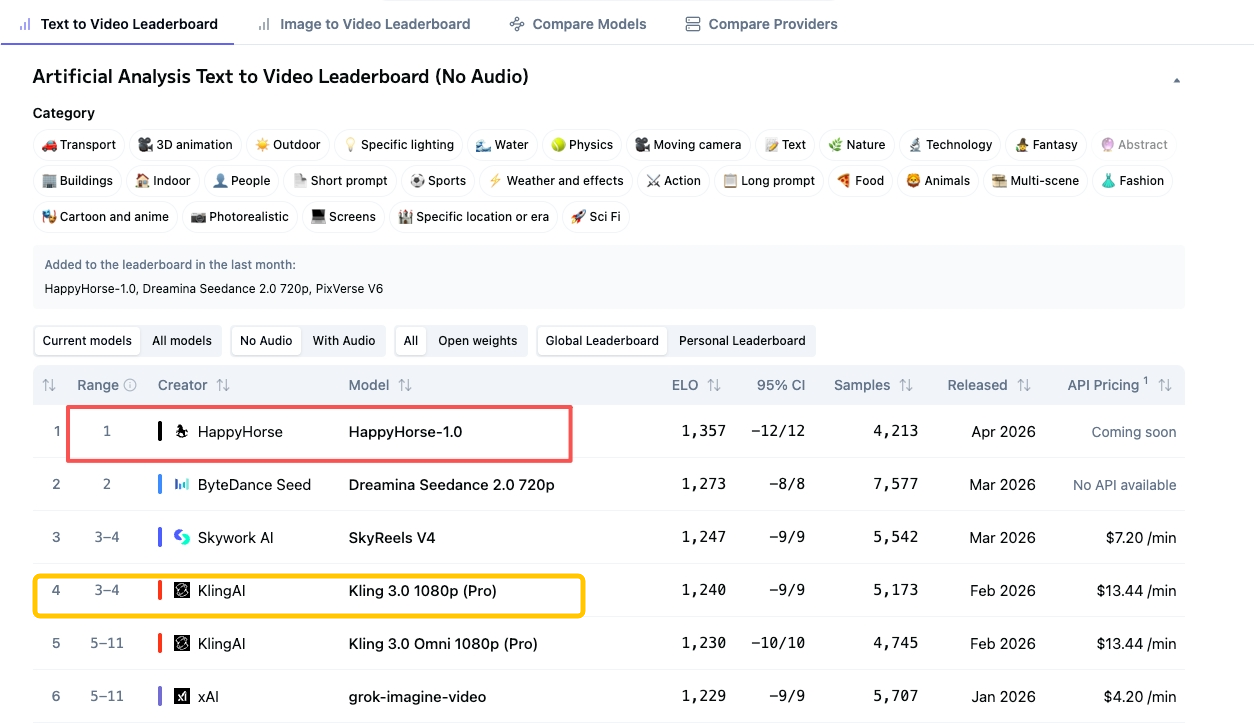
I’m Dora, I check the Artificial Analysis Video Arena leaderboard most weeks — blind user votes, Elo ratings, no lab self-reporting. Two days ago a name I'd never seen was sitting at #1. Above Kling. Above Seedance. Above everything. That's what kicked off this comparison.
If you're a TikTok seller, a short-form creator, or a brand running 5–10 videos a week, you've been watching the AI video space explode this quarter. Three names keep coming up: HappyHorse-1.0, Kling 3.0, and Veo 3.1. They're not competing on the same terms — and picking the wrong one for your use case costs you either money, edit time, or output quality you can't recover in post.
This isn't a ranking. It's a decision framework.
Why Compare These Three Models?
They represent three completely different bets on what AI video should be.
HappyHorse 1.0 was confirmed to be released by the Future Life Lab team of Taotian Group (Alibaba), led by Zhang Di — former Vice President of Kuaishou and head of Kling AI technology, where he led development of Kuaishou's flagship video generation model. That lineage matters. The person who built Kling's motion quality went independent and beat it on leaderboards within days of release.
Kling 3.0, released February 5, 2026 by Kuaishou, introduced native 4K output, built-in multilingual audio support, and creative tooling — including the Motion Brush feature — that makes it a viable alternative to Seedance 2.0, Sora 2, and Veo 3.1. It's the mature production tool with a proven track record.
Veo 3.1 from Google improves on Veo 3 with richer native audio including natural conversations and sound effects, better image-to-video with simultaneous audio generation, enhanced realism and character consistency, and improved narrative control with better cinematic style understanding. It's the infrastructure play — built for scale, priced for developers.
Three different teams. Three different philosophies. Here's the breakdown.
Core Specs Comparison Table
Feature | HappyHorse-1.0 | Kling 3.0 | Veo 3.1 |
Max resolution | 1080p | 4K native | 1080p standard / 4K via Ultra |
Clip length | ~5–10s | Up to 15s | Up to 8s per generation |
Native audio | Yes — joint single pass | Yes — multilingual | Yes — spatial audio + dialogue |
Vertical (9:16) | Yes | Yes | Yes |
Motion Control | Not available | Yes (Motion Brush) | No |
On-screen text | Not confirmed | Excellent | Good |
Open source | Yes (imminent release) | No | No |
Entry price | Free credits / $1.80 per HD video | Free tier / from $6.99/mo | $7.99/mo (Fast) / $0.15/sec API |
Commercial use | Yes (paid plans) | Yes (paid plans) | Yes |
Motion Quality and Visual Consistency
This is where the comparison gets interesting — and where the leaderboard data tells a more nuanced story than most people realize.
HappyHorse-1.0
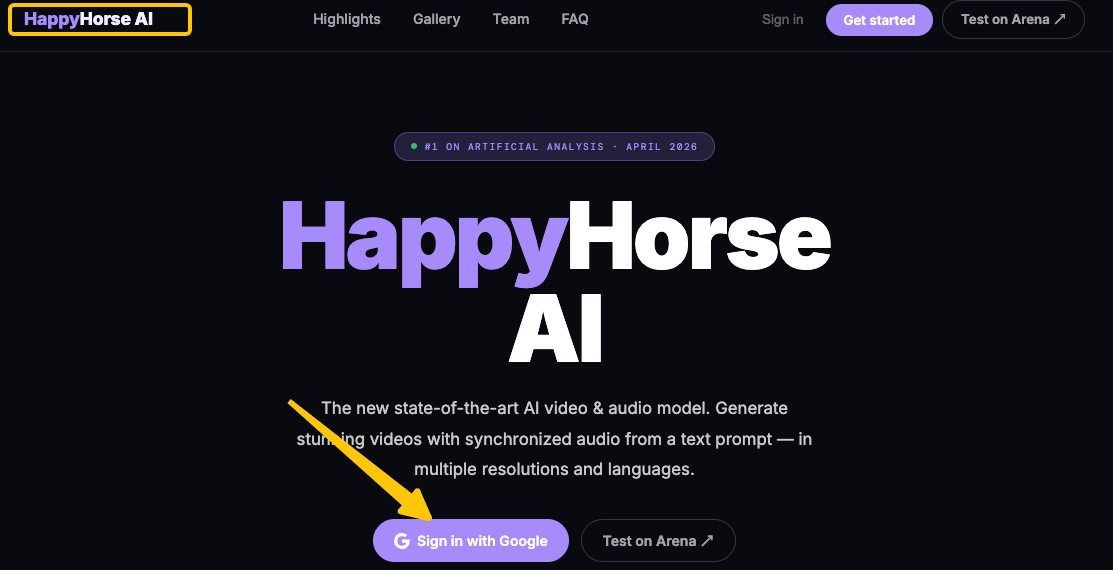
The top image-to-video models without audio by Elo rating are: HappyHorse-1.0 at Elo 1402, Dreamina Seedance 2.0 at 1355, grok-imagine-video at 1331, PixVerse V6 at 1324, and Kling 3.0 Omni 1080p Pro at 1297. In text-to-video without audio, HappyHorse-1.0 currently leads with an Elo score of 1357, with the top models including Dreamina Seedance 2.0 at 1273, SkyReels V4 at 1244, and Kling 3.0 1080p Pro at 1243.
But here's the caveat I'd be doing you a disservice to skip. Elo scores for newly added models are more volatile than established ones — Seedance 2.0 has over 7,500 vote samples in the T2V category, while HappyHorse's sample count isn't publicly broken out yet. These numbers will shift as more votes come in.
What this means in practice: motion feels fluid, body movement reads naturally, and cinematic camera drift is notably better than most models. Creators testing it blind keep picking it. That's real signal — just not yet a settled verdict.
Kling 3.0
This is the model I keep recommending to teams with structured production workflows. The Motion Brush lets you draw motion paths on top of frames — no other major model has an equivalent feature, giving you a level of creative control that text prompts can't match.
The text rendering is genuinely differentiated. Signs, brand logos, and price tags stay legible inside generated video. If you've ever tried to keep readable text in AI video outputs, you know what a battle that usually is. For e-commerce and marketing teams, that feature alone can justify the choice.
Kling 3.0 uses an integrated creative engine for multimodal creation — combining video, audio, and text so visual fidelity, motion, and sound stay cohesive across a clip. It can generate up to about 15 seconds with multiple scenes — roughly 2–6 shots — from a single structured prompt.
Veo 3.1
Compared to Veo 3 and earlier versions, Veo 3.1 introduces better temporal stability, more consistent object tracking, and improved camera control — making it highly usable for both developers and creators.
The spatial audio is the most immersive of the three. Ambient sound — the kind that makes a product video feel like it was shot in a real space — is where Veo consistently outperforms. Pure dialogue synchronization is slightly less accurate than Kling's dedicated multilingual processing.
Edit-Readiness for Short-Form Creators
Resolution and Aspect Ratio
All three support 9:16 vertical — the baseline requirement for TikTok, Reels, and Shorts. The differences matter downstream.
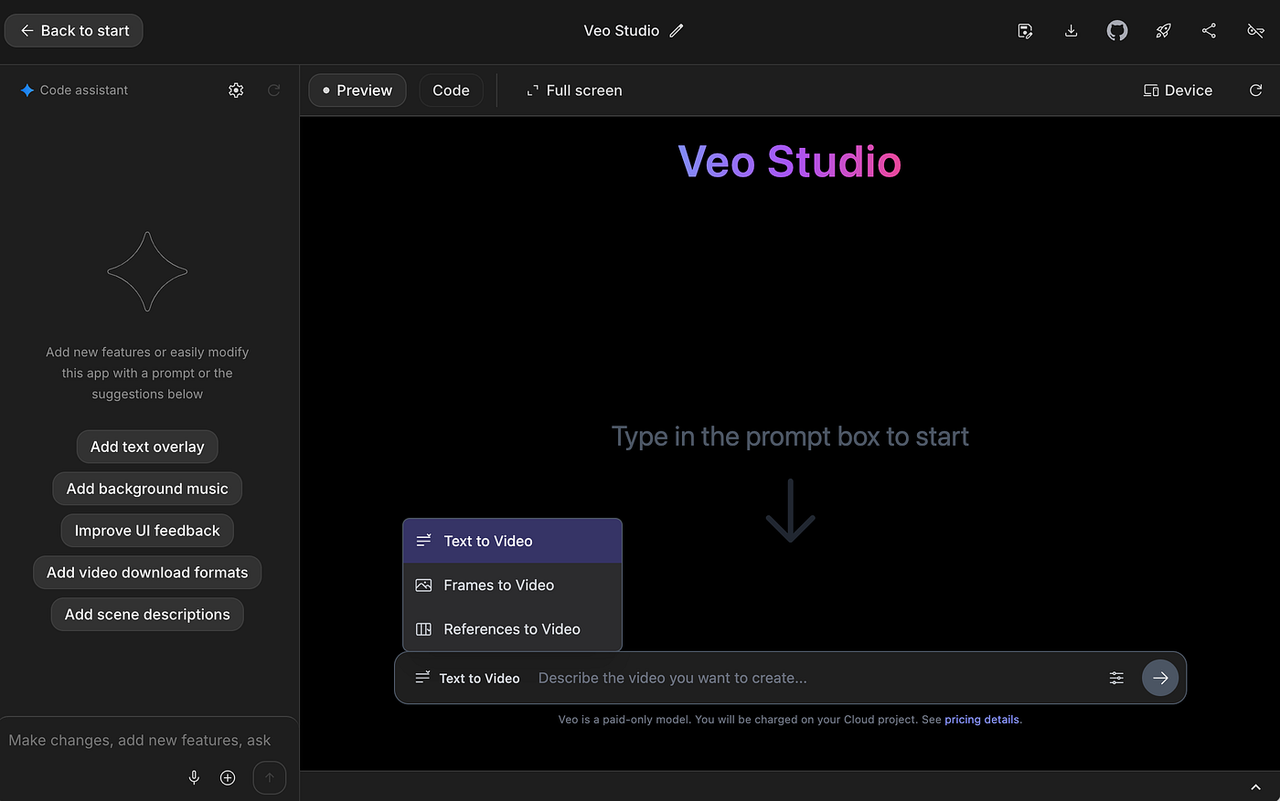
HappyHorse supports multiple aspect ratios including 16:9, 9:16, 4:3, 3:4, 21:9, and 1:1, giving full flexibility for any platform or content format, with native 1080p output.
Kling 3.0's native 4K is overkill for most social posts — but genuinely useful when you need to reframe or crop aggressively without quality loss. For e-commerce teams doing product close-ups, that resolution overhead matters.
Veo 3.1 caps each generation at 8 seconds. For short-form content that's often fine, but a 15-second Reel hook means two generations stitched together — which adds an editing step most creators would rather skip.
Captioning and Reformatting Ease
HappyHorse clips drop cleanly into standard editors. The 1080p ceiling means no downsampling needed for most platforms.
Kling 3.0's text rendering advantage becomes a headache when localizing — if the model bakes legible text into the video itself, reformatting for different regions requires regenerating, not just editing.
Audio and Lip-Sync
This is where each model diverges most clearly.
HappyHorse generates audio and video jointly in a single forward pass — not layered after the fact. Most closed models either don't generate audio at all or generate it in a separate stage, while HappyHorse generates both modalities in the same Transformer at the same time. The result is audio that doesn't feel dubbed. Lip-sync works natively across 7 languages including Mandarin, Cantonese, English, Japanese, Korean, German, and French.
Kling 3.0 handles multilingual audio with strong character consistency — multi-character dialogue with correct lip-sync was a major 3.0 upgrade. For brands targeting Asian markets specifically, Kling's training data advantage shows clearly in output quality.
Veo 3.1's spatial audio is the most immersive of the three. According to Google's Veo 3.1 overview on Vertex AI, the model automatically generates three-dimensional sound environments that enhance viewer immersion without requiring separate audio production — a genuine differentiator for lifestyle and brand content.
Access, Pricing, and Platform Availability
This is the part most comparison articles gloss over. The actual cost-per-usable-clip is what matters, not the headline monthly price.
HappyHorse: Every USD converts to 100 credits. Standard video generation costs 180 credits per video, and HD video generation costs 240 credits. A 7-day no-questions-asked refund window applies to new subscriptions. The model is confirmed open source, meaning self-hosting on H100 hardware is a real option for teams with infrastructure. API pricing will be announced at launch.
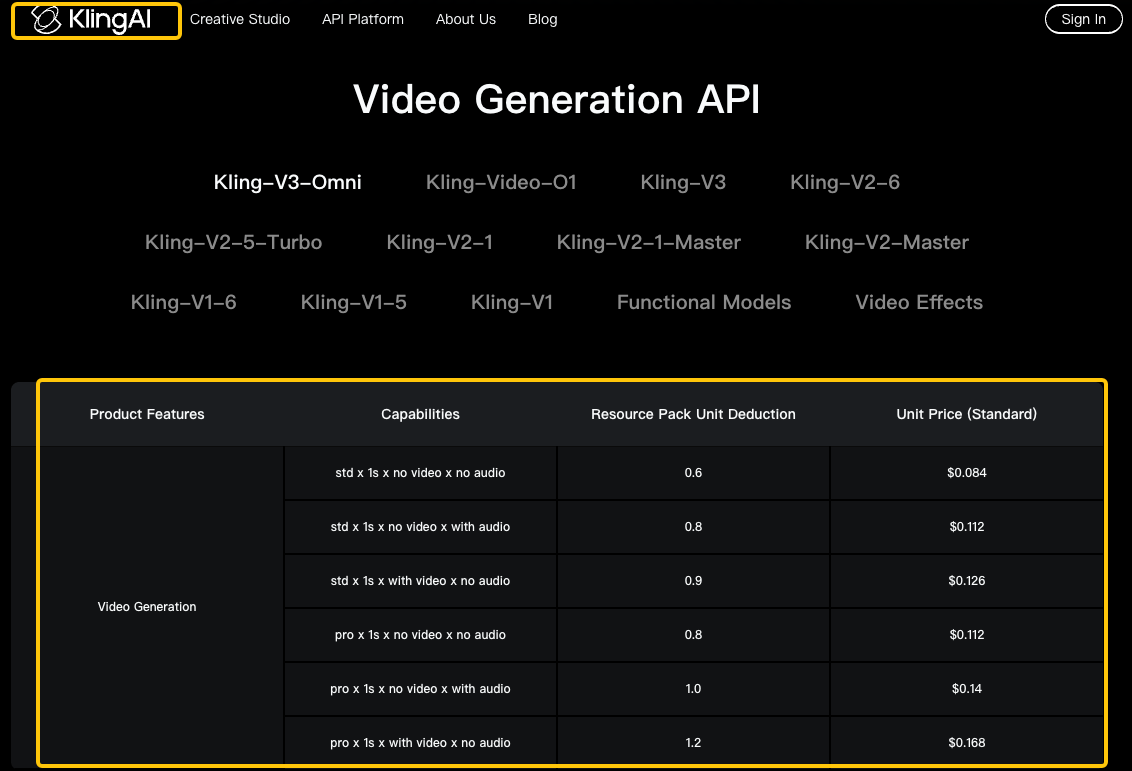
Kling 3.0: Plans range from a free tier with 66 daily credits to Standard at $6.99/month with around 660 credits, Pro at approximately $37/month with 3,000 credits, and Ultra at $180/month with 26,000 credits including Kling 3.0 early access. All subscription credits expire at the end of each billing cycle — they do not roll over. That expiration policy catches a lot of teams off guard. Separately purchased top-up packs don't expire. You can review current rates on the Kling AI official pricing page.
Veo 3.1: API pricing starts at $0.15/second for Veo 3.1 Fast and $0.40/second for Standard quality, both including audio generation. Subscription access ranges from $7.99/month on Google AI Plus with Veo 3.1 Fast access up to $249.99/month for the Ultra tier with full Veo 3.1 capabilities. The full breakdown is on the Google AI pricing page — and it changes frequently.
Best Fit by Use Case
TikTok / Reels / Shorts
Pick Kling 3.0 if you need multi-shot hooks with consistent characters across cuts. The Motion Control feature drove a viral explosion of dance-transfer content for a reason — it's the only model that lets you extract motion from a reference video and apply it to any subject. Nothing else comes close natively.
Pick HappyHorse if raw visual quality in blind comparison is your priority and you can work with early-access limitations. The Elo gap over competitors in no-audio categories is meaningful, and the joint audio-video generation reduces your post-production workload.
Brand Campaigns
Kling 3.0 for campaigns requiring legible text, brand logos, or multi-character dialogue. The text rendering fidelity is a genuine differentiator. Veo 3.1 for campaigns where audio atmosphere matters — product launches, lifestyle content, anything where spatial sound adds immersion that other models can't replicate.
E-Commerce Product Video
Kling 3.0 wins here by a clear margin. Text legibility, Motion Brush for product framing control, and 4K output for flexible cropping make it the most practical tool for e-commerce teams running high volume. Kling 3.0 sits in the middle of the pricing spectrum — cheaper than Veo 3.1 and Runway for comparable quality, while the motion control and multi-shot features justify the premium for creators who need those capabilities.
Limitations Across All Three
Be honest with yourself about these before committing budget.
HappyHorse-1.0: Real production access is still limited. The two highest-quality models by Elo — HappyHorse and Seedance 2.0 — are both inaccessible via public API. The practical leaderboard for teams who need to ship today starts at position #3. Monitor the HappyHorse official site for API and weight release updates.
Kling 3.0: Credit expiration is a genuine problem for teams with uneven production cycles. The Kuaishou content moderation system is also notably aggressive — even innocent prompts occasionally get flagged, which kills iteration speed under deadline pressure.
Veo 3.1: The full Veo 3.1 model featuring native audio generation and 4K upscaling is strictly locked behind the $19.99/month Gemini Advanced subscription or the complex Vertex AI API. The 8-second clip limit means multi-shot sequences require stitching — adding edit time most short-form creators would rather eliminate.
How to Choose: Decision Framework
Start with one question: what's the bottleneck in your current workflow?
Output quality / visual realism is the bottleneck → Test HappyHorse now via the Artificial Analysis Video Arena while monitoring API availability. Run your own blind comparisons before committing.
Creative control is the bottleneck (you know what motion you want) → Kling 3.0 with Motion Brush. Nothing else gives you that level of precision without live-action reference footage.
Audio and immersive sound is the bottleneck → Veo 3.1. Access it through Google AI Studio or the Gemini API. Spatial audio at this quality level isn't available anywhere else right now.
Budget for high-volume production is the bottleneck → HappyHorse when API access stabilizes (open source = no per-second fees long-term); Kling Standard tier for structured testing at moderate volume.
On-screen text legibility is the bottleneck → Kling 3.0. Not a competition.
FAQ
Q: Which model produces the most edit-ready output?
A: Kling 3.0 for teams using multi-shot sequences — output arrives already structured as a scene, not a single clip requiring assembly. HappyHorse's joint audio-video generation also reduces post-audio work significantly. Veo 3.1 requires stitching across the 8-second generation limit, which adds a step most creators want to eliminate.
Q: Which is best for product video?
A: Kling 3.0 by a clear margin, primarily because of text rendering fidelity and Motion Control. If your product video needs a visible price tag, a legible brand name, or a controlled motion path for a packaged item, Kling handles this more reliably than either alternative. For pure visual atmosphere without on-screen text, Veo 3.1 is a strong second.
Q: Can I use all three commercially?
A: Yes, with paid plans on all three. HappyHorse offers commercial usage rights with its premium subscription plans. Kling 3.0 commercial rights begin at the Standard paid tier — free tier outputs carry watermarks and cannot be used commercially. Veo 3.1 commercial use is permitted under Google's terms of service via both the Gemini API and Vertex AI.
Q: Which supports the longest clips?
A: Kling 3.0 at up to 15 seconds in a single multi-shot generation. HappyHorse generates roughly 5–10 second clips. Veo 3.1 caps each generation at 8 seconds, requiring multiple generations and manual stitching for anything longer — a real friction point for short-form narrative content.
Q: Are any of these open source?
A: HappyHorse-1.0 is fully open source with complete commercial licensing — all model weights, distilled models, super-resolution modules, and inference code are publicly available on GitHub. Kling 3.0 and Veo 3.1 are both closed-source, API-only services. You cannot self-host or fine-tune either of them. That distinction matters significantly if you're building a product on top of AI video infrastructure and want to avoid vendor lock-in.
Conclusion
I'm still watching HappyHorse closely. The Elo gap is real, the team lineage is credible, and the open-source commitment — if it ships on schedule — changes the economics of AI video in a way that Kling and Veo are structurally unable to match. But leaderboard #1 on day two with volatile vote counts isn't the same as production reliability.
For most creators making a decision this week: Kling 3.0 for structured, text-heavy, motion-controlled content; Veo 3.1 for audio-forward brand work; and HappyHorse firmly on the watchlist until API access stabilizes.
And before you commit to any of them — run your actual prompts through the Artificial Analysis Video Arena blind test first. Models update faster than any comparison article can keep up with, including this one.
Previous posts: