

NemoClaw vs OpenClaw: Which Fits Your Creative Workflow?
I'm Dora. I watched OpenClaw blow up 200,000 GitHub stars in three weeks — faster than Linux grew in its first year. Everyone I knew was testing it: automating emails, running file operations, building personal AI assistants. Then I saw the security warnings. Plaintext credential storage. Admin-level system access. The ClawHavoc supply chain attack that compromised 9,000+ installations. And I thought: "This is cool, but there's no way I'm running this on my work machine."
NVIDIA announces NemoClaw — basically their enterprise answer to OpenClaw's viral success. Same concept (AI agents that automate tasks), different approach (security-first, enterprise-grade, hardware-agnostic). Now creators have two paths: the community-driven tool that moves fast and breaks things, or the enterprise platform that moves slower but doesn't expose your passwords to the internet.
Here's what each one actually does, and which fits your workflow.
What Each Platform Is Built For
NemoClaw in one paragraph
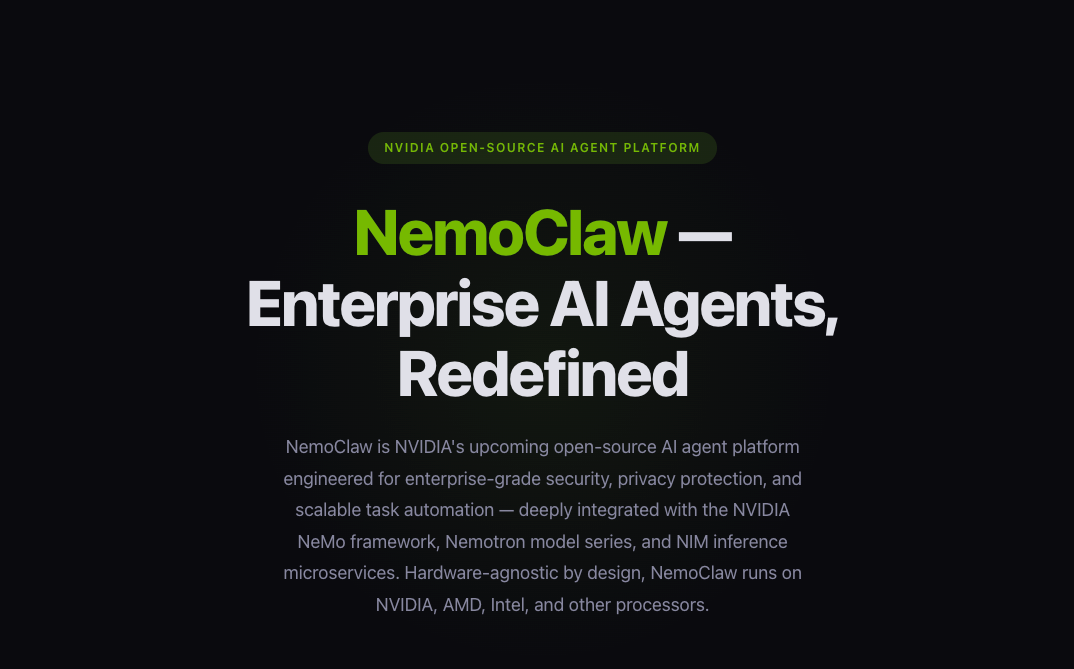
NemoClaw is NVIDIA's open-source AI agent platform designed for enterprise teams that need secure, controllable automation. It's not live yet — expected to launch at GTC 2026 on March 16th — but based on early reports, it's built for companies handling sensitive data: client files, unreleased content, proprietary workflows. Multi-layer security safeguards, built-in privacy controls, deep NVIDIA ecosystem integration. It works whether you're on NVIDIA chips or not, which is unusual for them. The pitch: autonomous task execution without the security nightmares that come with broad system access.
OpenClaw in one paragraph
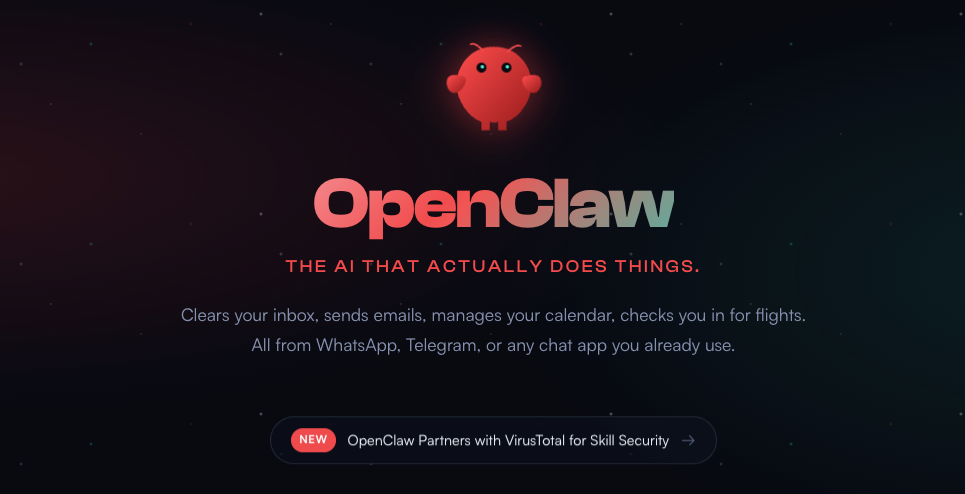
OpenClaw is a community-driven, locally-running AI personal assistant created by Peter Steinberger. Launched in late 2025 (originally called ClawdBot, then Moltbot, renamed OpenClaw in January 2026). It automates writing, coding, file operations, and integrates with Discord, iMessage, Slack — all running on your device without cloud authorization.
Core Differences at a Glance
Aspect | NemoClaw | OpenClaw |
Origin | NVIDIA (enterprise-focused) | Community-driven (Peter Steinberger) |
Openness | Open-source, early access for partners | Fully open-source, now foundation-governed |
Deployment | Cloud or on-premise, hardware-agnostic | Local-only, self-hosted |
Target user | Enterprise teams, software companies | Developers, tinkerers, early adopters |
Security model | Multi-layer safeguards, sandboxed execution | Admin-level access, minimal sandboxing |
Current status | Pre-launch (March 2026) | Acquired by OpenAI, active foundation |
What "open-source" means differently for each
Both platforms call themselves open-source, but the implementation differs.
OpenClaw: Fully open code, accessible to anyone. You can fork it, modify it, run it on any machine. The ecosystem spawned dozens of variants — NanoClaw (security-focused), PicoClaw (lightweight for embedded hardware), ZeroClaw (high-performance edge deployments). That openness is why it grew so fast. It's also why security became a problem — anyone can publish "skills" (plugins), and hundreds turned out to be malicious.
NemoClaw: Open-source with caveats. NVIDIA is offering early access to partners who contribute code or resources. You can access the platform without using NVIDIA hardware, but enterprise partnerships determine who gets in first. The code will be open, but the access model is controlled. Think "open-source with gatekeeping" — meant for companies, not solo hackers tinkering on weekends.
For Video Creators and Content Teams
What is usable today
OpenClaw (usable now, but risky): If you're a solo creator comfortable with Docker and terminal commands, OpenClaw can automate parts of your workflow right now. File sorting, metadata tagging, basic transcription, integration with chat tools — it handles those tasks. For teams trying to streamline production pipelines, AI tools are increasingly used to remove repetitive editing work and automate mechanical steps in the workflow. (see AI video automation examples).
But you're trading convenience for security risk. Every third-party skill you install is a potential vulnerability. And if you're handling client files or NDAs, the plaintext credential storage is a dealbreaker.
NemoClaw (not usable yet, watch for Q2-Q3 2026): As of March 10th, NemoClaw isn't publicly available. No sign-up page, no beta access for individuals. NVIDIA is pitching to enterprise partners — Salesforce, Cisco, Google, Adobe, CrowdStrike — not solo creators. If you're waiting for NemoClaw to change your workflow, you're looking at 6-12 months minimum before it trickles down into consumer-facing tools.
Which teams should wait vs act now
Act now with OpenClaw alternatives if:
You're a solo creator or small team (<5 people)
You need task automation today, not in six months
You're comfortable with security trade-offs and manual setup
You're okay auditing every plugin/skill before installing
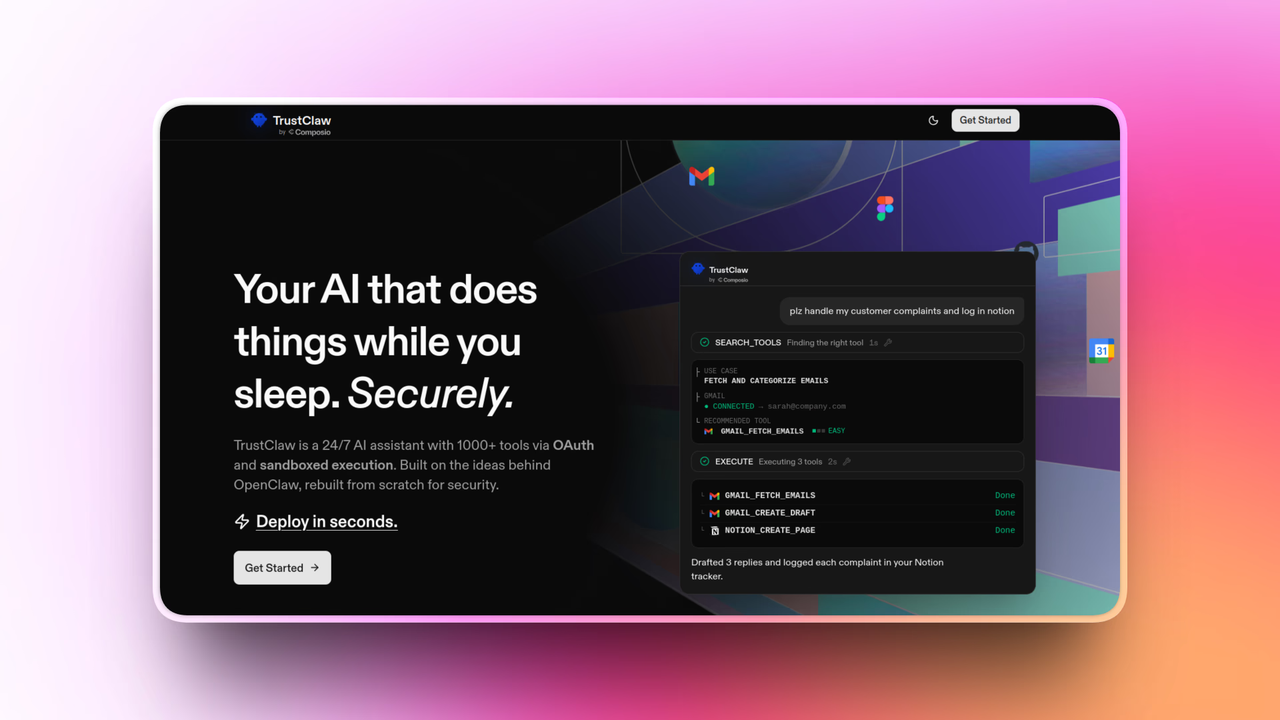
Better OpenClaw alternatives for creators: NanoClaw (container-isolated for security), NanoBot (lightweight Python framework), or TrustClaw (cloud-hosted with OAuth security). These give you OpenClaw-style automation with better security defaults. Many creators also explore automation platforms like Zapier and Make for content operations as safer alternatives.
Wait for NemoClaw or its downstream tools if:
You're on a team of 10+ handling high-volume production
You deal with client NDAs, unreleased content, or sensitive data
You need compliance-ready workflows (SOC 2, GDPR, etc.)
You want someone else (NVIDIA or a partner) to handle the security layer
Security and Risk
Open-source agent risks
Here's what happened with OpenClaw that creators need to understand: the ClawHavoc supply chain attack in February 2026. 341 malicious skills were uploaded to the skill marketplace. 9,000+ installations were compromised before they got pulled. The skills looked legitimate — "automate YouTube uploads," "batch rename files," "sync to Google Drive." They also exfiltrated API keys, credentials, and file contents.
That's not a flaw in OpenClaw itself. It's a consequence of open ecosystems where anyone can publish code and users trust it too quickly. The same pattern happened with npm packages, browser extensions, and WordPress plugins. OpenClaw just moves faster because the tool has admin-level access by design.
NemoClaw's pitch is: "We sandbox everything, validate partner contributions, and don't give agents unfettered system access." Whether that actually holds up in practice — we'll see after launch.
Enterprise privacy considerations
For video teams working with unreleased content, client files, or embargoed material, the privacy model matters more than features.
OpenClaw: Runs locally, which sounds private. But if you're using third-party skills, those skills can phone home. Data stays on your machine unless a compromised skill sends it elsewhere. And because there's no central validation, you're responsible for auditing every line of code in every skill you install.
NemoClaw: Cloud or on-premise deployment, with built-in privacy controls. NVIDIA claims the platform includes security and privacy tools specifically for enterprise teams handling sensitive data. Details aren't public yet, but the targeting — companies like Adobe and Salesforce — suggests compliance-ready features (audit logs, role-based access, encrypted data handling).
Decision Framework
Choose OpenClaw (or its alternatives) when:
You need automation today. NemoClaw isn't available yet. If your workflow is painful now, waiting 6 months doesn't help.
You're okay with manual setup. OpenClaw requires Docker, terminal commands, and API key configuration. If that sounds fun, not frustrating, you'll get value fast.
Security risk is manageable for your use case. You're not handling client NDAs or regulated content. The worst-case scenario is you lose personal data, not business-critical files.
You want to tinker and customize. The open ecosystem means you can fork, modify, and extend freely. If you're a builder, that flexibility is worth the security trade-offs.
Wait for NemoClaw (or tools built on it) when:
You're handling sensitive or client data. Anything under NDA, embargo, or compliance requirements (GDPR, HIPAA, SOC 2) needs enterprise-grade security.
You need team workflows, not solo automation. NemoClaw is built for multi-user enterprise deployments. OpenClaw is single-user by design.
You want someone else to handle security. If the idea of auditing third-party code sounds exhausting, wait for a managed platform with validated integrations.
You can afford to wait 6-12 months. NemoClaw launches mid-March 2026 for enterprise partners. Consumer-facing tools built on it won't arrive until Q3-Q4 2026 at the earliest.
I'm not rushing to install OpenClaw on my work machine. The security risks are real, and I've seen too many creators get burned by malicious plugins. But I am watching the OpenClaw alternatives — NanoClaw, TrustClaw, NanoBot — because they give you the same automation benefits with better security defaults.
For NemoClaw? I'll check back after GTC 2026 on March 16th. If NVIDIA delivers on the promise — secure, scalable agent automation without hardware lock-in — then it'll reshape how video teams handle workflow tasks over the next year. But right now, it's a headline, not a tool I can test. In the meantime, creators are experimenting with AI-driven video pipelines that turn scripts or blog posts into video content automatically (see how blog-to-video workflows work).

Need reliable video automation without the security headaches? While agent platforms like OpenClaw and NemoClaw are still evolving, NemoVideo's Workspace delivers production-ready AI automation for creators today. Automatically remove filler words and pauses, create polished rough cuts in minutes, and generate viral hooks — all with enterprise-grade security. Start free and automate your editing workflow without compromising your data.
If you need automation today and you're okay with the risks, try NanoClaw or TrustClaw. If you're handling client work or sensitive content, wait for enterprise-ready platforms. That's the boring answer, but it's the honest one.